
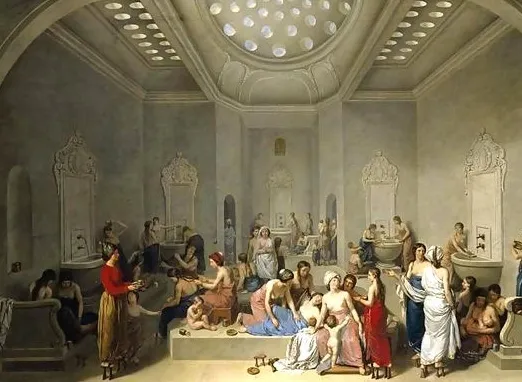

The Turkish Hamam, commonly called a bathhouse, represents an iconic cultural institution with historical roots extending back several centuries. Renowned for its luxurious rituals and tranquil atmosphere, the Hamam has served a vital role in Turkish society by providing a venue for hygiene, relaxation, and social interaction. Notably, numerous elements of the Turkish Hamam are intricately linked to the traditions of Roman baths, thereby underscoring a shared heritage that connects antiquity with contemporary practices. I formerly held the position of Sales and Marketing Manager at the Hurrem Sultan Hamam in Istanbul for approximately five years. Due to my background in history and guidance, this opportunity constituted the most fulfilling corporate role I have experienced. Furthermore, my office was established by the esteemed architect Sinan, who served as the chief architect of the Ottoman Empire, enriching my learning experience considerably.
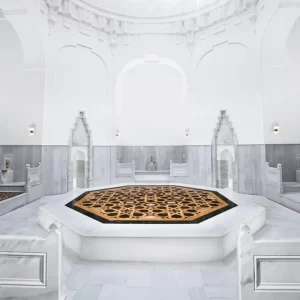
The Origins of the Bathing Culture
The Roman bathhouse was an integral part of daily life in ancient Rome, serving as a center for hygiene, leisure, and community engagement. These structures were often grand, featuring intricate mosaics, soaring columns, and advanced engineering to regulate water temperature. The baths were divided into sections: the caldarium (hot room), tepidarium (warm room), and frigidarium (cold room), offering a comprehensive experience for both body and mind.
When the Romans expanded their empire into Anatolia (modern-day Turkey), they brought their bathhouse culture with them. Over time, these traditions mingled with local customs and evolved into what is now known as the Turkish Hamam. The Ottoman Empire further refined this concept, embedding it into the fabric of everyday life.
(I,used to work at the Hurrem Sultan Hamam)

Key Similarities Between Turkish Hamams and Roman Baths
Hydrotherapy and Relaxation
Both Turkish Hamams and Roman baths revolve around the use of water to cleanse and rejuvenate the body. The sequential transition from hot to cold environments is a hallmark of both traditions, promoting circulation, detoxification, and overall wellness.
Architectural Grandeur
The design of Turkish Hamams echoes the architectural brilliance of Roman baths. Both feature domed ceilings, intricate tilework, and sophisticated heating systems. The Romans used hypocaust systems to heat floors and walls, while Hamams employ gülektaşi (marble heating slabs) to retain warmth.
Social Interaction
In both cultures, bathing was as much a social activity as a hygienic one. Roman baths served as gathering places for discussions, business transactions, and even political debates. Similarly, Hamams became hubs for community bonding, where friends and family could connect in a tranquil setting.
Ritualized Cleansing
Rituals of purification are central to both traditions. Roman baths included a series of steps involving oiling the body, scraping dirt with a strigil, and immersing oneself in various pools. Turkish Hamams incorporate similar practices, such as exfoliation with a kese (scrubbing mitt) and massages with aromatic soaps.
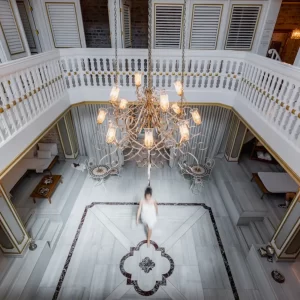
Distinctive Features of the Turkish Hamam
While the Turkish Hamam draws inspiration from Roman baths, it has developed unique characteristics over centuries. For instance, the Hamam places greater emphasis on steam, creating a moist environment that contrasts with the drier heat of Roman saunas. Additionally, Turkish Hamams are often gender-segregated and infused with Islamic cultural elements, such as the ritual of ablution (wudu).
Another notable difference is the role of the tellak (bath attendant) in the Hamam, who guides visitors through the cleansing rituals and ensures their comfort. This personalized attention elevates the experience, blending relaxation with care.
Hamams in Istanbul and Athens
Both Istanbul and Athens are home to historic bathhouses that continue to enchant visitors.
Istanbul: The city boasts some of the most famous Hamams in the world, many of which date back to the Ottoman era. Among the renowned bathhouses are the Çukurcuma Hamamı, a charming 19th-century establishment in the artsy district of Beyoğlu, and the historic Cağaloğlu Hamamı, built in 1741 and celebrated for its opulent interiors and royal ambiance. The establishment features an exceptional fine-dining restaurant named Lokanta 1741. I highly recommend the ‘pistachio kebab’ available at this restaurant.
Another noteworthy site is the Kılıç Ali Paşa Hamamı, designed by Mimar Sinan in the 16th century for Ottoman naval officers, blending elegance with maritime history.
The recently restored Zeyrek Çinili Hamam stands out as a modernized gem, featuring traditional tilework and a contemporary approach to relaxation, offering visitors a unique blend of history and luxury.
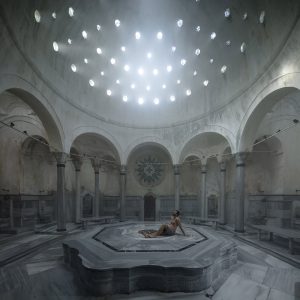
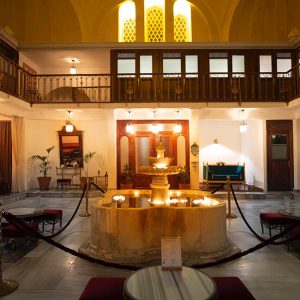
Athens: While Turkish Hamams are less prominent in Athens compared to Istanbul, the city still retains its own historical bathing culture influenced by the Ottoman period. One of the most well-preserved examples is the Bey Hamam, built in 1454 under Ottoman rule. Though now serving as a cultural site, it showcases the architectural elegance of a traditional Hamam with its domed chambers and marble surfaces. Additionally, Athens has embraced modern adaptations of the Hamam experience, with several establishments offering traditional Turkish-style baths to locals and tourists alike.
A Living Legacy
Today, both Turkish Hamams and Roman baths continue to captivate visitors with their timeless appeal. Roman bath sites, such as those in Bath, England, or Pompeii, Italy, offer a glimpse into ancient history, while Turkish Hamams remain vibrant, living institutions where people can immerse themselves in centuries-old traditions.
By comparing these two bathing cultures, we gain a deeper appreciation for their shared values: the pursuit of cleanliness, the importance of community, and the joy of rejuvenation. Whether you find yourself in a historic Hamam in Istanbul or wandering the ruins of a Roman bathhouse, these spaces remind us of the universal human desire for wellness and connection.
Exploring the ties between Turkish Hamams and Roman baths not only highlights their cultural significance but also showcases the enduring nature of these ancient practices. Both traditions, rooted in history yet adaptable to modern needs, continue to offer an oasis of tranquility in an ever-changing world.
0 Comment