


When you lift that tiny porcelain cup and breathe in the rich aroma of finely ground coffee, you’re not just drinking caffeine — you’re sipping centuries of intertwined history, empire, memory, and Mediterranean soul. The story of Turkish and Greek coffee begins not with a rivalry, but with a shared legacy that traces back to the beating heart of the Ottoman world.
Coffee first arrived in Istanbul around the 1550s, brought from Yemen through the bustling Red Sea ports of Mocha and Jeddah. The Ottomans, true masters of refinement, transformed this foreign bean into a cultural symbol. The earliest “kahvehaneler” (coffeehouses) opened in Istanbul’s Tahtakale and Eminönü districts — elegant meeting places where merchants, poets, and philosophers gathered to discuss politics, literature, and life itself. By the 17th century, coffee culture had spread through the empire’s veins — from Izmir to Thessaloniki, Sarajevo to Damascus, Athens to Alexandria — becoming an inseparable part of daily rhythm.
In both Turkey and Greece, the preparation follows the same delicate ritual that has changed little over 500 years. Finely ground Arabica beans are mixed with cold water and sugar — sade/skétos (plain), orta/métrios (medium), or şekerli/glýkos (sweet) — in a small copper pot known as a cezve in Turkish or bríki in Greek. The coffee is stirred gently, never boiled hard, and brewed slowly over low heat, traditionally on glowing sand or embers, until a rich, golden foam rises to the surface. This “first rise” is sacred — too slight, and the flavor is flat; too much, and it’s bitter. The liquid is poured unfiltered into small cups, allowing the fine grounds to settle at the bottom, where, after the last sip, the ritual of coffee fortune-telling (fal) begins — a playful, mystical art practiced on both sides of the Aegean.
What makes this coffee unique isn’t just its taste, but its pace. It’s meant to be sipped slowly, shared deeply, and accompanied by a conversation, a memory, or a moment of silence. It represents hospitality (misafirperverlik in Turkish, filoxenía in Greek) — the act of welcoming others with warmth and respect. In 2013, UNESCO recognized Turkish Coffee Culture and Tradition as part of humanity’s intangible heritage, highlighting its social and spiritual significance.
Of course, every coffee lover asks: Where can I taste the best one?
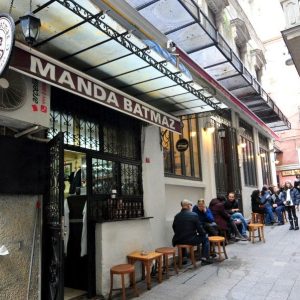
In Turkey, begin in Istanbul, where the Ottoman coffee story started. Head to Mandabatmaz on Istiklal Street — its name literally means “so thick even a buffalo wouldn’t sink” — for one of the richest brews in the city. At Fazıl Bey’in Türk Kahvesi in Kadıköy, every cup is freshly ground and prepared over sand, served with a glass of water and a smile. If you wander through Sultanahmet, try Tarihi Sultanahmet Kahvecisi for a traditional experience with a view of domes and minarets. In Cappadocia, the little town of Avanos is famous for its pottery — and for coffee brewed in handmade clay cezves that give an earthy aroma. For a coastal touch, Kızkulesi Café offers Turkish coffee with a Bosphorus breeze and a 360-degree view of Istanbul’s skyline.

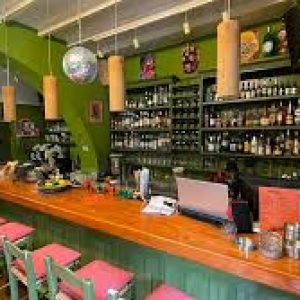
Across the Aegean, Greece embraces the same tradition with its own flair. In Athens, visit Mokka Specialty Coffee, where the baristas prepare classic Greek coffee on hot sand in a 1920s-style café. In Plaka, Yiasemi Café serves traditional Greek coffee on a sunlit terrace surrounded by jasmine and bougainvillea. On the islands, coffee takes on a seaside rhythm — in Santorini, Kafeneion of Fira offers thick, aromatic coffee with caldera views; while in Mykonos, Notorious Café blends local charm with Mediterranean chic. For an authentic village feel, head to Thessaloniki’s Ladadika district, where old kafeneia (traditional cafés) still serve steaming cups to regulars who play tavli (backgammon) and discuss politics for hours.

Though modern espresso culture has spread everywhere, Turkish and Greek coffee remain timeless — a symbol of continuity in a rapidly changing world. Each cup carries a story: of caravans crossing deserts, sailors resting in Aegean ports, and neighbors sharing laughter across narrow streets. Politics may have renamed it, but the essence never changed.
So whether you find yourself in an Istanbul alley or a Cycladic village, take a moment to sit down, order that tiny cup, and let history brew quietly before you. Because in the end, Turkish or Greek, it’s not just coffee — it’s heritage, friendship, and a sip of the Mediterranean soul.
0 Comment